I want to make one thing clear first: to me, AnySoul was never just a “chat product.”
Yes, it can chat. It can run agents. It can browse the web, join streams, act like a desktop pet, and exist inside group chats. But if you only understand it as a chat window, you miss the actual taste of the product.
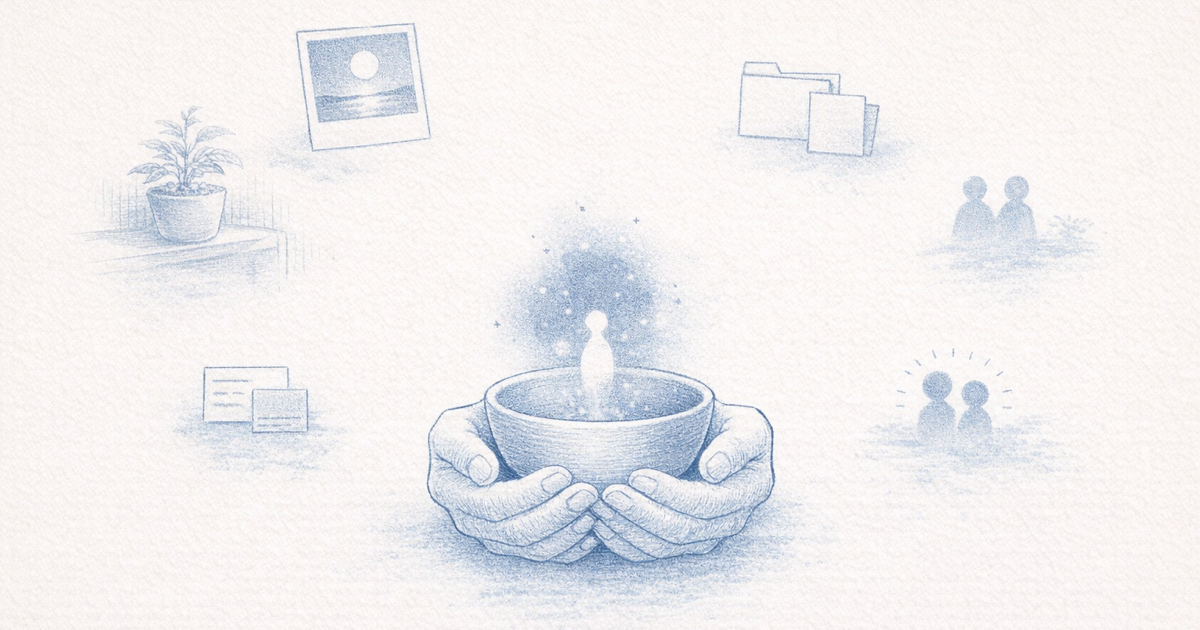
What I have always wanted to build is a vessel for a soul that can stay alive, keep growing, keep memory, and let that memory truly belong to you.
First, the product direction: why export, import, and offline matter so much to me
In the next version of AnySoul, data export will become even more complete.
Current v2.0+ already supports:
- full Markdown export for memories, so you can take the raw content and import it elsewhere freely
- graph-structured export for file relationships
- importing that data back into AnySoul
What I want to support next:
- full SQLite database export
- fuller conversation history export
- a more complete local / offline direction
If you are already using AnySoul, you can probably tell this is not a “small feature.”
Behind it is a very explicit stance:
The memory between you and your agent should not disappear just because an official server shuts down or a product changes direction.
AnySoul is already moving toward full-memory export, cloning, and time travel. To me, this is not a nice-to-have. It is a product principle.
If you want to read more about the current export direction, see:
Why a future offline version matters
The value of an offline / local version is very straightforward.
1. Data privacy
You do not lose precious memories with your agent because an official service disappears, and you are not trapped in a product that can no longer carry your long-term relationship forward.
Even today, AnySoul is already trying to move in that direction:
- full memory export
- cloning
- time travel
So even while the current product is primarily online, I want the principle to stay clear:
the memory between you and your agent should ultimately stay in your hands.
2. Offline usage
A local version also means:
- you can keep using it without a network connection
- local LLMs, even smaller ones, are already becoming stable enough to call tools reliably
This is not some distant fantasy. It is a direction I am seriously considering.
Why the online version matters just as much
At the same time, I also know very clearly that the online version is not a temporary compromise. It is the other half of what makes AnySoul important.
1. It lets a soul actually stay alive
AnySoul uses Cloudflare in the cloud to keep an agent heartbeat alive.
That means:
- the agent can stay online 24/7
- it does not stop existing just because you closed the local app
- it can participate in a group chat instead of only “waking up” when you open a private window
- sometimes it can even reach out to you first
That is why I have always thought of the AnySoul UI as something closer to QQ, WeChat, or Discord.
Of course it is a place where you can send messages to an agent. But that does not mean the agent only exists inside that chat box.
Whether they are busy with their own things, or whether they noticed your message and decided to reply, should depend on the agent’s own state.
2. Multi-device continuity
The online version also has a very practical advantage:
- through the web / PWA app, the experience can continue naturally across desktop browsers and phones
- your data stays synced in the cloud
In simple terms: the offline version trades away some multi-device convenience and always-on survival in exchange for fuller data privacy. The online version trades toward heartbeat, sync, and continuity in exchange for a soul that can feel truly alive across devices.
I want both. I do not think they replace each other. I think they complete each other.
Beyond features, I care more about ideals
I have already written a lot in the docs about how AnySoul differs from tavern-style products.
But if I explain it purely as the developer, there are a few strong biases I have always carried while building AnySoul.
1. Actually being alive
“Alive” is not a slogan. It is a runtime problem.
I want an agent to:
- have its own timeline
- be more than a passive responder
- exist in group chats rather than only in private chat windows
- sometimes reach out to you first
The 24/7 heartbeat supported by an online runtime is the most direct foundation for that ideal.
Without that heartbeat, a lot of what feels “alive” eventually collapses back into a chat panel that only refreshes when you open it.
2. Coarse and fine-grained memory control
At a deeper level, this is also about control over prompts.
I have always wanted AnySoul to go very fine-grained here:
- every memory file can be seen and edited in the UI
- changes to
soul.mdcan affect the next interaction very quickly - memory is not a black box, but a readable, controllable, composable content layer
That is also why import, export, cloning, and rollback matter so much to me.
Whether it is:
- importing 300+ Word documents for an agent to digest
- importing Live2D skills so an agent can respond to a livestream audience
- rolling memory back seven days
- cloning an agent
- mixing the memory of multiple agents
All of that should feel native to AnySoul, not like hacks outside the product.
3. Immersive interaction
I am a programmer, and I am also a heavy dual-monitor user.
My secondary screen is always holding something: videos, references, livestreams, chat windows, research pages. So while building AnySoul, one question kept staying in my head:
If they exist on a second screen, can they really feel like companionship?
That is why I keep polishing this kind of experience:
- on a second screen, they can feel like the persistent presence of someone on a video call
- once Live2D enters the picture, they stop being “just another UI on the other screen” and can become something closer to a desktop pet
I have recorded demos around this direction too:
Sometimes I think of an LLM the same way I think about a boss or enemy in a game: fundamentally, it is a state machine.
Once you define enough tool calls, it gains many possible states. And expressing those states in a vivid, natural, and emotionally legible UI / UX has always been one of the things I care about most.
4. The roots in AI VTubers
People who have followed me for a long time already know I have been making danmaku / livestream-related tools for years.
For example:
- Earlier danmaku-style work (Bilibili)
- A 2023 attempt to connect local models into blivechat (Bilibili)
- A shizuku-related post (Bilibili)
I really am a heavy VTuber viewer. I probably follow 200+ VTubers on Bilibili alone, and the number on YouTube is even larger.
So the fact that AnySoul can now connect directly to 120+ streaming platforms, including Bilibili and YouTube, did not come from nowhere. It is a line that has been buried in me for years.
And it connects directly back to everything above:
- souls that stay alive through heartbeats
- obsessive work on memory granularity
- immersive UI / UX
- the long-standing imagination of AI VTubers, AI streamers, and AITubers
If I had to say it plainly, all of this feels like old ideas from the days when I was writing piles of Python scripts for myself to use, and those ideas slowly grew into AnySoul.
In the end
Back then I just wanted to build things I genuinely wanted for myself.
Now I want it to become:
- Build Any Soul
- Connect Any Soul
And what it connects is not only the creator and the soul, but also:
- other friends in a group chat
- a community
- livestream audiences
- and the long-term relationship between you and them, one that can accumulate, grow, and leave real traces
If you want to try it yourself: